In total there is said to be around 400 million dogs in the world.
The domestic dog has been one of the most popular working and companion animals throughout human history.
Dogs perform many useful tasks for humans including hunting, farm work and security as well as assisting those with disabilities such as the blind.
Although experts often disagree, there is scientific evidence which shows that the domestication of dogs could have occurred more than 15,000 years ago.
There are hundreds of different breeds of dogs.
Examples of these breeds include: Bulldog, German Shepherd, Collie, Golden Retriever, St Bernard, Greyhound, Bloodhound, Chihuahua, Labrador, Great Dane, Rottweiler, Boxer and Cocker Spaniel.
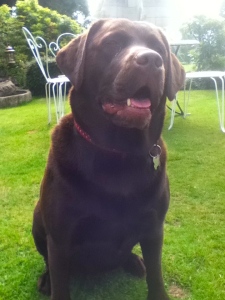
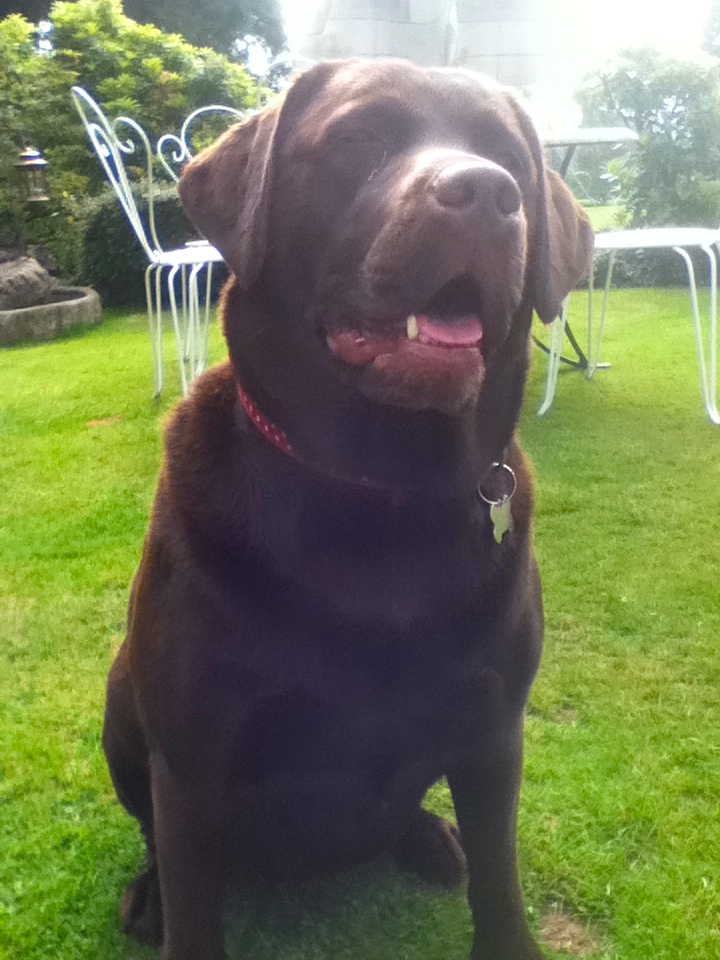
The most popular breed of dog in the world by registered ownership is the Labrador. With their gentle nature, obedience, intelligence and near limitless energy, Labradors make for excellent family pets and reliable workers. They often assist police and are a common choice as guide dogs.
Dogs have formed such a strong bond as pets, workers and companions to humans that they have earned the nickname “man’s best friend”.
Humans help train various dog breeds to enter in competitions such as breed shows, agility and obedience contests, racing and sled pulling.
Dog have superior hearing than humans, capable of hearing sounds at four times the distance.
Dogs have a remarkable sense of smell, they are capable of differentiating odors in concentrations nearly 100 million times lower than humans can.
The average life span for a dog is around 10 to 14 years.
Those involved in dog breeding refer to males as ‘dogs’, females as ‘bitches’, dogs younger than a year old as ‘puppies’ and a group of offspring as a ‘litter’.
Domestic dogs are omnivores, they feed on a variety of foods including grains, vegetables and meats. Quoted from http://www.sciencekids.co.nz/sciencefacts/animals/dog.html
Happy Dogs!
The local areas I work/ cover in is Romiley , Stockport , Woodley, Bredbury , Hyde , Gee Cross , Hazel Grove , Godley , Disley , Marple , Marple Bridge , Glossop , Poynton , Higher Poynton , New Mills , Hayfield , Whaley Bridge , Mellor. If you are not situated in one of these areas do not hesitate to contact me as other areas are considered. These do not apply for home boarding.
Aussie Dog Care Email : ATHOMPS1@sky.com
Aussie Dog Care Facebook : https://www.facebook.com/AussieDogCareUk for updates when you go away for peace of mind as well as some walking clients.
Aussie Dog Care Twitter : https://twitter.com/AussieDogCare
Carefully clean all areas your dog has previously soiled using a warm solution of biological washing powder (for example, a teaspoon of powder dissolved in a cup of warm water) or a specially formulated product from your vet, which will remove all traces of the smell from your house.
Every day
When you first wake up, last thing at night and every hour during the day, take your dog outside to a place in your garden that you have chosen and let your dog walk up and down or run about and sniff the area (both exercise and sniffing helps stimulate elimination).
Put soiled newspaper or faeces in this area so that the smell tells your dog where to go next time. Stay out with your dog and patiently walk up and down for at least five minutes. If your dog starts to go to the toilet, give praise. It is important that, for the first two weeks, there is constant supervision so that your dog cannot go to the toilet in the house.
During the times that you cannot supervise your dog or when you go to sleep, confine the dog to bed. You need to find a suitable way to do this, either by restricting them to bed with a barrier, or investing in an indoor kennel. A dog will become accustomed to this, without making a noise or trying to break out, when left there for short periods of time.
Few dogs soil their own bed and, if confined to bed, they are unlikely to relieve themselves. Although it is unfair to confine them for long periods, this does provide a way of preventing them from soiling the house for short periods when you cannot supervise. This avoids perpetuating bad habits at times when you need to concentrate on other things.
Between trips to the garden, supervise your dog continually when in the house. This means keeping your dog in view at all times and being aware of what the dog is doing. When unable to supervise, confine them to bed, but do not leave your dog there for long periods of time.
When you see your dog about to toilet in the house
If about to go to the toilet indoors, take your dog immediately to your chosen place in the garden and praise the dog by giving a food treat or a game with a favourite toy. It is essential your dog associates going to that place with a reward. Catching in time means your dog will still need to go. Wait until the dog has performed and praise well.
When you find a puddle or mess
Do not punish your dog for any “accidents” discovered too late. It may make you feel better but it is most unpleasant for your dog and ultimately does not teach anything. Consider that these accidents are now your fault rather than the dog’s since you were not supervising closely enough.
You need to continue with this routine for at least two weeks. During this time, your dog learns about getting praise for going to the toilet outside and, since there is no chance to go inside, the habit of going outside develops. Throughout these first two weeks and for a while afterwards, continue to go out with your pet to the garden in order to praise them until the training is firmly established in your dog’s mind.
After two weeks of the above routine, gradually increase the time between visits to the garden. Your dog will eventually want to go to the toilet at a time other than the one you select. At this time, your dog will probably become more active or may wander over to the door. Watch for a change in behaviour and take the dog out quickly. Gradually, as you begin to be able to recognise the signs that mean your dog needs to go, you can relax your supervision in the house.
Specific signals that indicate that your dog wants to go out may include running to the door, whining or just being generally restless. Reinforce these signals by letting your dog out and the dog will soon be asking to go out whenever the toilet is needed. House training will happen more easily if you keep to the same pattern of feeding and exercising each day.
At night
The easiest solution is to position your dog’s bed somewhere outside your bedroom door and confine your pet in the usual way. Leave your bedroom door open so that if your dog wakes up and needs to go during the night, you will hear whining or moving around. Get up and take your dog outside, following all the daytime procedures. Confine your dog to the bed once more when you come back in.
Do not leave a dog confined to bed all night without you being available to go out when the dog really needs to go. Not only is this unkind but, if you force your dog to mess in the bed, the dog may develop a habit of doing this and you have lost the chance of teaching your dog to be clean.
If your dog is likely to bark when left in the bed at night, either allow this for a few nights and ignore the barking (your dog eventually learns barking is not rewarded and ceases to do it) or teach your dog to get used to being confined to the bed more gradually, during the day, so that your dog can tolerate it at night.
When you go out
If going out for less than two hours, you could leave the dog confined to bed in the usual way, but ensure the animal cannot be hurt when confined. Make sure your dog had the chance to exercise and go to the toilet before doing so. If you will be out for two hours or longer, do not confine your dog. Leave the pet in one room only and cover as much of the floor area as possible with a large sheet of polythene covered with newspaper.
This does not teach your dog to be clean but makes any mess easier to clean up and prevents the house becoming soiled. Do not scold or punish if you find that your dog has gone to the toilet on the floor when you return.
“He knows he has done wrong!”
Some owners comment, “He knows he has done wrong, because he looks guilty”. In fact, the dog has learned that if humans walk into a room where there is a mess on the floor, a telling off or punishment follows. Your dog is actually showing submission to you, hoping you obey the law of the pack and stop your aggression. Unfortunately, a submissive posture can look like a guilty one to us and we often mistakenly believe the dog knows what they have done is wrong. We then conclude that any mess in the house is done on purpose or because the dog is too lazy to go outside. We are likely to punish more as a result, which often makes the problem worse.
“Don’t go when humans are around”
Some dogs learn just one thing about house training – that it is wrong to go to the toilet in the house in front of their owners. This is because they would have been scolded or punished if caught in the act of going in the house. Puppies are often put out into the garden and left there. Once outside, a puppy that finds being alone very uncomfortable concentrates on getting back inside to the owner, rather than learning to go to the toilet outside.
Hence, dogs often learn that it is wrong to go in the presence of humans but never learn that it is wrong to go in the house. Consequently, the only option is to wait until the owner is not looking or sneak away into another room when they want to relieve themselves.”
The local areas I work/ cover in is Romiley , Stockport , Woodley, Bredbury , Hyde , Gee Cross , Hazel Grove , Godley , Disley , Marple , Marple Bridge , Glossop , Poynton , Higher Poynton , New Mills , Hayfield , Whaley Bridge , Mellor. If you are not situated in one of these areas do not hesitate to contact me as other areas are considered. These do not apply for home boarding.
Aussie Dog Care Email : ATHOMPS1@sky.com
Aussie Dog Care Facebook : https://www.facebook.com/AussieDogCareUk for updates when you go away for peace of mind as well as some walking clients.
Aussie Dog Care Twitter : https://twitter.com/AussieDogCare
The Wolf Centre is an amazing place in North Devon where Shaun Ellis a wolf behaviorist lives. I am very interested in wolves more than most animals and it would be amazing if anyone reading this can try to help save the Wolf Centre in North Devon!
Below quoted from http://www.thewolfcentre.co.uk/page/save-the-centre-campaign
“The Wolf Centre is being forced to move!
As most of you are already aware The Wolf Centre is reluctantly having to relocate from North Devon.
Combe Martin has been the home of our wolves for 13 years during which time they have become tremendous ambassadors for the education and research for wolves world-wide.
Wolves face uncertain future…
We are desperately looking for an appropriate place to relocate The Wolf Centre to. As you can imagine, this is no easy task!!!
Just moving the centre itself is a huge undertaking, but our main concern is the animals.
Some of our wolves are reaching the later stages of their lives which makes it incredibly dangerous to sedate them for transportation. Our only alternative is to move them consciously which involves encouraging them to enter transportation cages where we can move them as safely as possible. This method is not without risk but this is the wolves best chance of survival!!
We need your help!
We have already identified possible locations that would be suitable for The Wolf Centre, unfortunately all so far come at a high price. Although we do have investments from the existing business, we are under a strict time limit to raise the further funds needed and therefore this puts us in an impossible position.
We would like to thank everybody for their generosity and support so far and hate to ask for you to extend this further however we are desperately in need of support so if you are in a position to be able to help raise funds or donate, no matter how small, it will certainly make a huge difference to the animals.
If you would like to donate to relocate the wolves please send to07803541490 using the Barclay’s pingit app
The local areas I work/ cover in is Romiley , Stockport , Woodley, Bredbury , Hyde , Gee Cross , Hazel Grove , Godley , Disley , Marple , Marple Bridge , Glossop , Poynton , Higher Poynton , New Mills , Hayfield , Whaley Bridge , Mellor. If you are not situated in one of these areas do not hesitate to contact me as other areas are considered. These do not apply for home boarding.
Aussie Dog Care Email : ATHOMPS1@sky.com
Aussie Dog Care Facebook : https://www.facebook.com/AussieDogCareUk for updates when you go away for peace of mind as well as some walking clients.
Aussie Dog Care Twitter : https://twitter.com/AussieDogCare
At Aussie Dog Care we love regular trips to Lyme Park in Disley . If you scroll down below you can see our amazing day trip recently ay Lyme Park Disley , dog walking ! I actually used to live in Lyme Park!
The estate was granted to Sir Thomas Danyers in 1346 and passed to the Leghs of Lyme by marriage in 1388. It remained in the possession of the Legh family until 1946 when it was given to the National Trust. The house dates from the latter part of the 16th century. Modifications were made to it in the 1720s by Giacomo Leoni, who retained some of the Elizabethan features and added others, particularly the courtyard and the south range. It is difficult to classify Leoni’s work at Lyme, as it contains elements of both Palladian and Baroque styles.[a] Further modifications were made by Lewis Wyatt in the 19th century, especially to the interior. Formal gardens were created and developed in the late 19th and early 20th centuries. The house, gardens and park have been used as locations for filming and they are open to the public. The Lyme Caxton Missal is on display in the Library.” Quoted from http://en.wikipedia.org/wiki/Lyme_Park
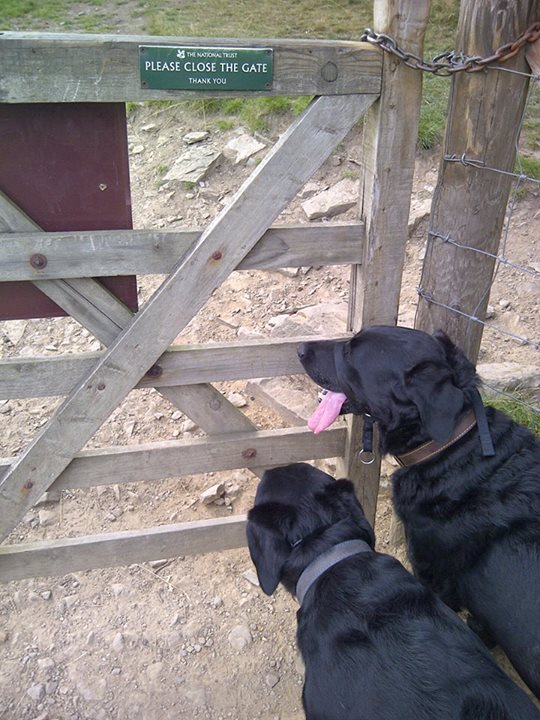
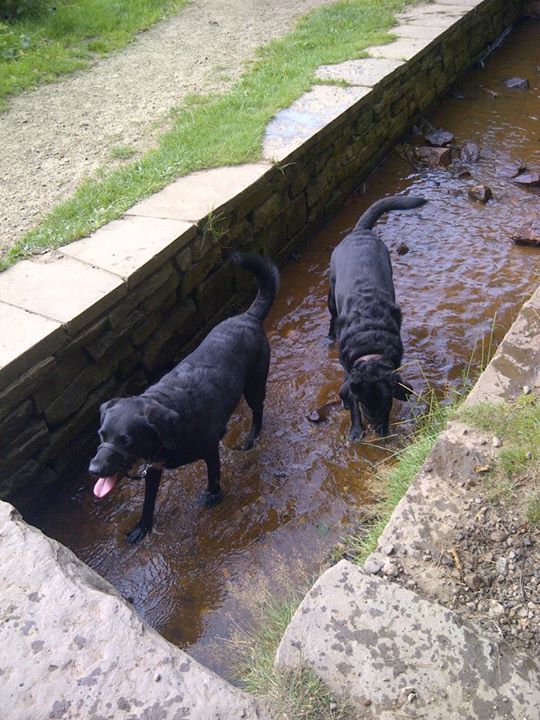
Bauer and Bobby“open the gate”Bauer and BobbyLyme Park Paddle.Bauer and Bobby
The local areas I work/ cover in is Romiley , Stockport , Woodley, Bredbury , Hyde , Gee Cross , Hazel Grove , Godley , Disley , Marple , Marple Bridge , Glossop , Poynton , Higher Poynton , New Mills , Hayfield , Whaley Bridge , Mellor. If you are not situated in one of these areas do not hesitate to contact me as other areas are considered. These do not apply for home boarding.
Aussie Dog Care Email : ATHOMPS1@sky.com
Aussie Dog Care Facebook : https://www.facebook.com/AussieDogCareUk for updates when you go away for peace of mind as well as some walking clients.
Aussie Dog Care Twitter : https://twitter.com/AussieDogCare
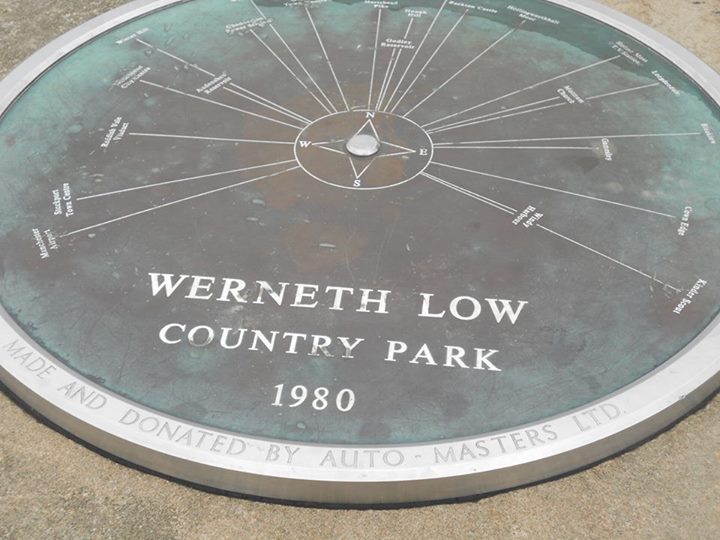
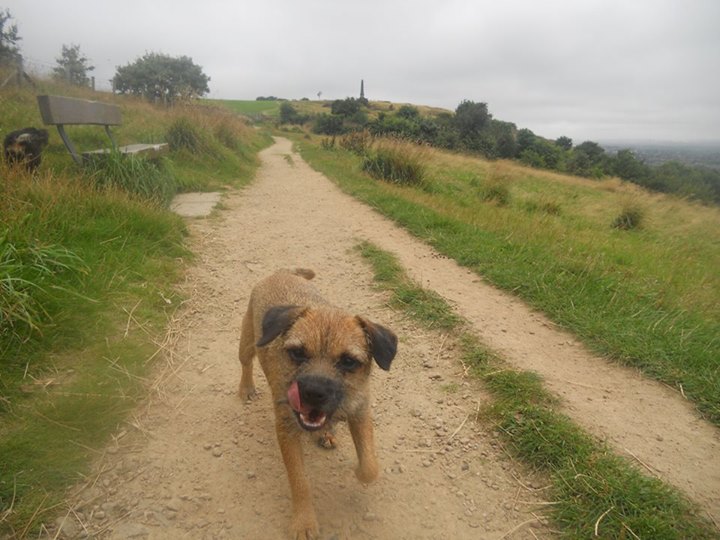
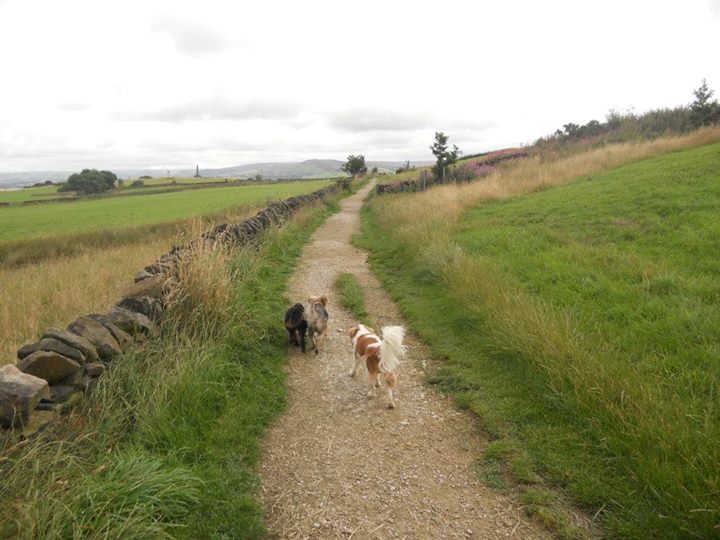
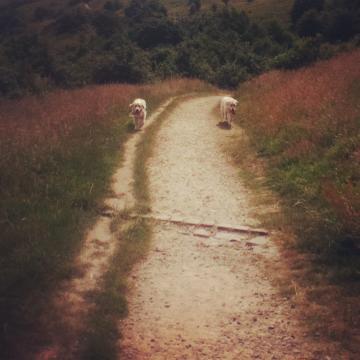
Werneth Low Country Park is another fantastic place to go with your dogs it has the Tameside Trial and the much longer Trans Pennine Trail passing through it! I am very lucky to be able to walk to Werneth Low Country Park from my house and the dogs have a fantastic time!
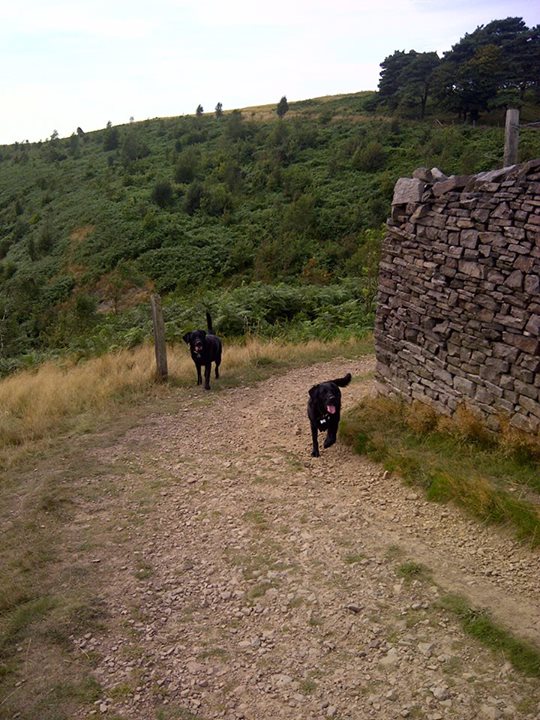
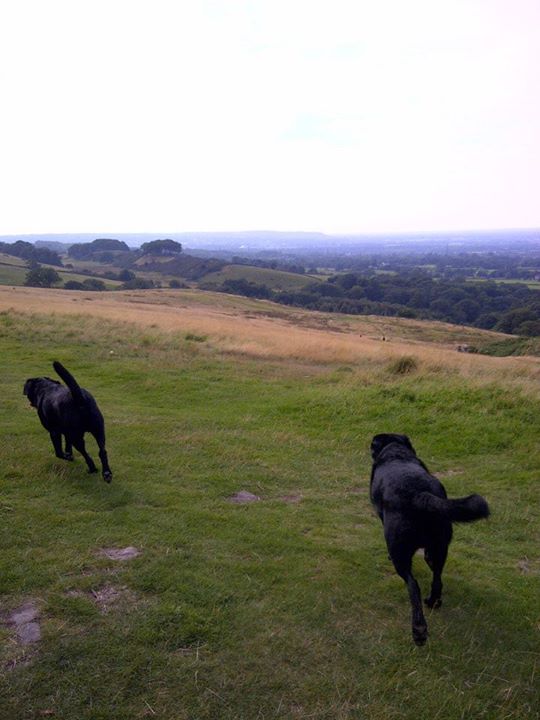
At Aussie Dog Care I am very lucky to be able to walk to Werneth Low Country Park , Etherow Park and Brabyns Park. Lots of dogs enjoy the walks around Werneth Low Country Park as you can see below.
Happy dogs on walks around Werneth Low.Memorial.
“The country park extends for 80 hectares (200 acres) across the Northern and Western slopes of Werneth Low. Only 9.5 miles from the city centre of Manchester, the area is both a haven for wildlife and an area where visitors can find peace and relaxation. The park’s location provides panoramic views across Manchester and beyond to Liverpool. The dark blue silhouette of the Welsh mountains can often be seen on clear days, as can the Pennine hills close by.”
Beautiful Views with Summer Flowers.Werneth Low Kisses!
The local areas I work/ cover in is Romiley , Stockport , Woodley, Bredbury , Hyde , Gee Cross , Hazel Grove , Godley , Disley , Marple , Marple Bridge , Glossop , Poynton , Higher Poynton , New Mills , Hayfield , Whaley Bridge , Mellor. If you are not situated in one of these areas do not hesitate to contact me as other areas are considered. These do not apply for home boarding.
Aussie Dog Care Email : ATHOMPS1@sky.com
Aussie Dog Care Facebook : https://www.facebook.com/AussieDogCareUk for updates when you go away for peace of mind as well as some walking clients.
Aussie Dog Care Twitter : https://twitter.com/AussieDogCare






 Aussie Dog Care